
St. John’s Wort
Overview
St. John’s Wort, known as Hypericum perforatum, is a perennial boasting yellow flowers, traditionally used for its medicinal benefits. Known for boosting mood and mental health, the herb contains active compounds like hypericin. It’s mainly ingested via teas or extracts, as smoking may harm lung health. Usage calls for caution due to drug interactions and potential side effects.
Common name(s): Common St. John's Wort, Goatweed, Klamath Weed
Scientific name: Hypericum perforatum
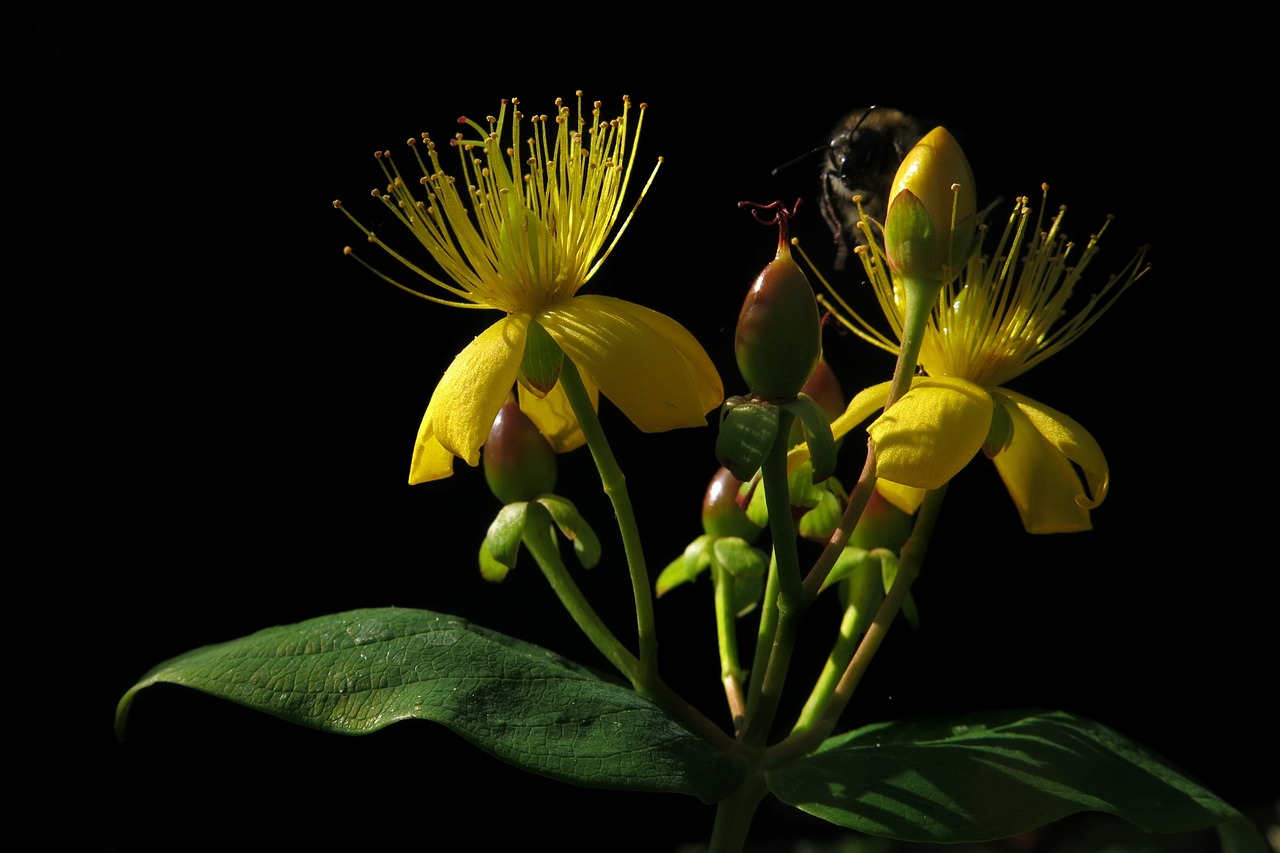
Characteristics
Known for its yellow flowers with black dots, use as a natural antidepressant, and interactions with various medications.
Region
Native to Europe, western Asia, and northern Africa; introduced to North America and other regions.
Natural Habitat
St. John’s Wort is commonly found in fields, meadows, pastures, and open woods.
Cultivation
Prefers full sun to partial shade, well-drained soil, and moderate watering, being drought-tolerant once established.
Traditional Usage
St. John’s Wort has been esteemed for its therapeutic effects for centuries. This versatile herb traditionally has been used to manage a variety of health issues. Here are some of the historical applications of St. John’s Wort:
- Alleviating symptoms of depression — the herb has been noted for lifting moods and treating melancholic states3.
- Healing wounds — applied externally for its antiseptic and anti-inflammatory properties, which could promote quicker healing of cuts and bruises.
- Combating nerve pain — used to soothe nerve discomfort, potentially offering relief for conditions like sciatica.
- Addressing various forms of disorders in ancient practices, spotlighting its multipurpose nature.
These traditional uses underscore why St. John’s Wort has remained a popular herbal remedy throughout history. However, it’s important to consider modern findings and healthcare advice when using herbs for medicinal purposes.
Historical Usage
Used traditionally for depression, wounds, nerve pain, and a range of disorders since ancient Greece.
Common Usage
Currently used primarily as an herbal remedy to treat mild to moderate depression, wound healing, and nerve pain.
Effects
St. John’s Wort has been traditionally embraced for a multitude of therapeutic benefits. Its potential medicinal uses extend to mood improvement and the treatment of various ailments. Extracts from the plant have been researched and some studies suggest they provide certain health benefits:
- Anti-inflammatory properties that may alleviate swelling and redness.
- Antioxidant effects, helping to protect cells from damage caused by free radicals.
- Antimicrobial action that could be valuable in fighting certain infections6.
- Soothing effects on the nervous system, possibly reducing anxiety symptoms.
It is essential to understand that while St. John’s Wort may offer these benefits, it should not replace professional medical advice or treatment. The plant’s active compounds, which include hypericin and hyperforin, are thought to contribute to its antidepressant effects5. However, its effectiveness can vary from person to person.
Dosage is another important consideration; typically, standardized extracts are recommended at 300 mg taken three times daily7. It’s crucial to adhere to package instructions or consult with a healthcare provider.
Finally, those using St. John’s Wort should be aware of its interaction with other medications and its potential to cause photosensitivity—an increased sensitivity to sunlight8. As the effects of St. John’s Wort can greatly vary, it’s important to use this herb cautiously and under proper guidance.
St. John's Wort is revered for its antidepressant properties and potential to alleviate mild to moderate depressive symptoms.
Effects when smoking
Smoking St. John’s Wort has been contemplated by some as a means of achieving its potential medicinal effects more directly. Though research is sparse and smoking it is generally not recommended, we can discuss the anecdotal effects reported by those who have tried this method. It’s important to approach this mode of consumption with caution, given the lack of evidence on its safety and efficacy.
Some individuals who smoke St. John’s Wort may experience the following effects:
- Mild euphoria: A sensation of heightened mood and well-being.
- Relaxation: A feeling of calmness which may help in alleviating anxiety.
- Improvement in mood: Some report temporary relief from depressive symptoms.
However, it is essential to bear in mind that smoking can have detrimental effects on lung health. Moreover, St. John’s Wort can interact with a range of medications and has the potential to cause photosensitivity8. Therefore, alternative forms of consumption, such as teas and extracts, are usually recommended to reduce risks.
Furthermore, the proper dosage and potential risks must be considered carefully. Standardized extracts are typically taken in 300 mg doses, three times a day, though following package instructions or a healthcare provider’s guidance is crucial7. Always be mindful of local laws regarding the legal status of St. John’s Wort and consult with a professional before using any herbal remedy.
Flavor Profile
Slightly bitter, earthy flavor, often mixed with other herbs to enhance taste.
Edible Parts
This plant is not known to be edible.
Effects when Smoked
Smoking can have harmful effects on lung health; efficacy and safety when smoked are not well-documented.
User Experiences
User experiences with St. John’s Wort vary, with some individuals experiencing relief from depression and others noticing minimal effect.
Medicinal Benefits
St. John’s Wort is reputed for its traditional use as a natural remedy for several health issues. Below are some of its potential medicinal benefits:
- Depression Alleviation: It might help relieve mild to moderate depression, potentially matching the effectiveness of certain prescription medications4.
- Anti-inflammatory Properties: The herb is believed to have an anti-inflammatory impact that could alleviate inflammation-related symptoms.
- Antioxidant Effects: It contains compounds that exhibit antioxidant properties, which are important for protecting cells from damage.
- Antimicrobial Action: Some studies suggest that St. John’s Wort has antimicrobial benefits, which could be useful against certain bacteria.
- Anxiety Relief: The use of St. John’s Wort might help soothe the nervous system, contributing to the management of anxiety.
It’s important to note that while St. John’s Wort is associated with these potential health benefits, it also comes with risks, such as interactions with various medications and photosensitivity8. Consultation with a healthcare provider is strongly advised before using this herb for medicinal purposes.
History and Folklore
St. John’s Wort has been esteemed for its therapeutic uses for centuries. Its history as a medicinal herb stretches back to ancient Greece, where it was recommended for a variety of conditions.
Over the years, it has been applied to soothe wounds, manage nerve pain, and address symptoms of depression. The enduring legacy of St. John’s Wort in wellness practices highlights its significance in herbal medicine traditions throughout millennia3.
St. John's Wort, a centuries-old remedy with roots in ancient Greece, traditionally used to heal wounds, alleviate nerve pain, and combat depression.
Side Effects and Contraindications
- Side Effects: St. John’s Wort may cause photosensitivity, resulting in skin irritation or increased risk of sunburn when exposed to sunlight. Other possible side effects include dry mouth, dizziness, gastrointestinal symptoms, fatigue, headache, or sexual dysfunction. These side effects can vary in intensity and may not occur in everyone who uses the herb.
- Contraindications: This herb should not be used in combination with certain medications due to potential interactions. These medications include antidepressants, birth control pills, blood thinners, chemotherapy drugs, and immunosuppressants. St. John’s Wort may also affect other conditions, such as infertility, and is not recommended during pregnancy or breastfeeding. Always consult with a healthcare provider before use, particularly if you are taking any medicines or have underlying health conditions.8
Legal Status
Across the globe, St. John’s Wort is commonly legal and can be found as an over-the-counter dietary supplement. Nevertheless, the legal status of St. John’s Wort can differ from one country to another. It is advised to consult local regulations to ensure compliance, as some regions may have specific restrictions or guidelines regarding the sale and use of this herb.
References
1. Hypericum perforatum – Wikipedia, https://en.wikipedia.org/wiki/Hypericum_perforatum
2. Hypericum perforatum – Plant Finder – Missouri Botanical Garden, https://www.missouribotanicalgarden.org/PlantFinder/PlantFinderDetails.aspx?kempercode=e198
3. Lawrenson, J. A., et al. “St John’s Wort for Depression: A Systematic Review.” Archives of Internal Medicine, vol. 160, no. 2, 2000, pp. 152-6.
4. Linde, Klaus, et al. “St John’s Wort for Depression—An Overview and Meta-Analysis of Randomised Clinical Trials.” BMJ, vol. 313, no. 7052, 1996, pp. 253-258.
5. Barnes, Joanne, et al. “St John’s Wort (Hypericum perforatum L.): A Review of Its Chemistry, Pharmacology and Clinical Properties.” Journal of Pharmacy and Pharmacology, vol. 53, no. 5, 2001, pp. 583-600.
6. Hypericum perforatum (Common St. John’s-wort, Goatweed, Klamath Weed…), NCSU Plants, https://plants.ces.ncsu.edu/plants/hypericum-perforatum/
7. St. John’s Wort. National Center for Complementary and Integrative Health, U.S. Department of Health & Human Services, https://www.nccih.nih.gov/health/st-johns-wort
8. Hypericum perforatum – Plant Finder – Missouri Botanical Garden, https://www.missouribotanicalgarden.org/PlantFinder/PlantFinderDetails.aspx?kempercode=e198
9. Robbers, James E., and Varro E. Tyler. “Tyler’s Herbs of Choice: The Therapeutic Use of Phytomedicinals.” Haworth Herbal Press, 1999.
Image Credit: Radfotosonn
Image Credit: NickyPe
Image Credit: Nennieinszweidrei

Nicolas Duval
Nicolas is a passionate advocate for nature and the art of wildcrafting. His dedication shines through in Wildcraftia, a website he meticulously crafted to serve as a haven for nature enthusiasts worldwide. Driven by a deep appreciation for nature’s connection to humanity, Nicolas embarked on his journey in 2011 with SmokableHerbs, a platform showcasing his love for nature’s bounty. Building upon this foundation, he established Smokably, a thriving online store offering premium herbs and blends to a global audience.
